
Altavista, Nayarit: Things Worth the Drive Up
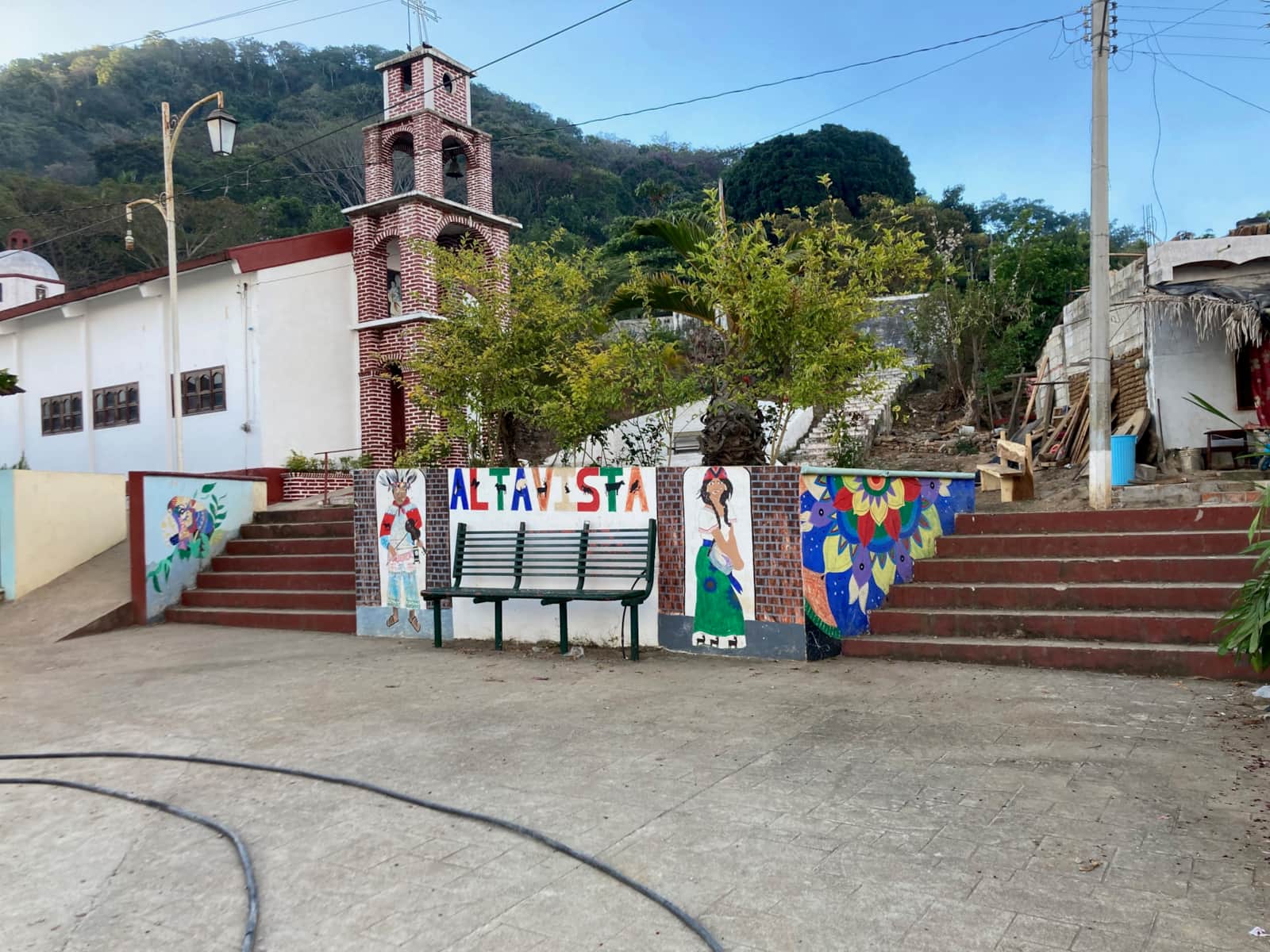
Altavista, Nayarit is a hill town of about fifteen hundred people in the municipality of Compostela, inland from Chacala and La Peñita. Most people who search for it are looking for the ancient carvings and the pools at the end of the walk. That is the best half day here, and there is more: hot springs, a waterfall, five beaches inside half an hour, and a ten day fiesta every year that ends on May 1.
Perfect if: you want a working town with a whole house instead of a hotel room.
Skip it if: you want to walk to dinner or to the sand.
Table of Contents
- Walking to the ancient pools
- Soaking in the hot springs
- Picking a different beach every day
- Eating well without a restaurant
- Waking up to roosters and chachalacas
- Ten days of fiesta that end on May 1
- The Reinas
- May 1, the biggest night
- The best time to visit
- Where you stay in Altavista
- Frequently asked questions
- Is Altavista, Nayarit worth visiting?
- When is the fiesta in Altavista, Nayarit?
- Does Altavista have a beach?
- Does Altavista have restaurants?
- How much does it cost to see the Altavista petroglyphs?
- Keep reading
Walking to the ancient pools
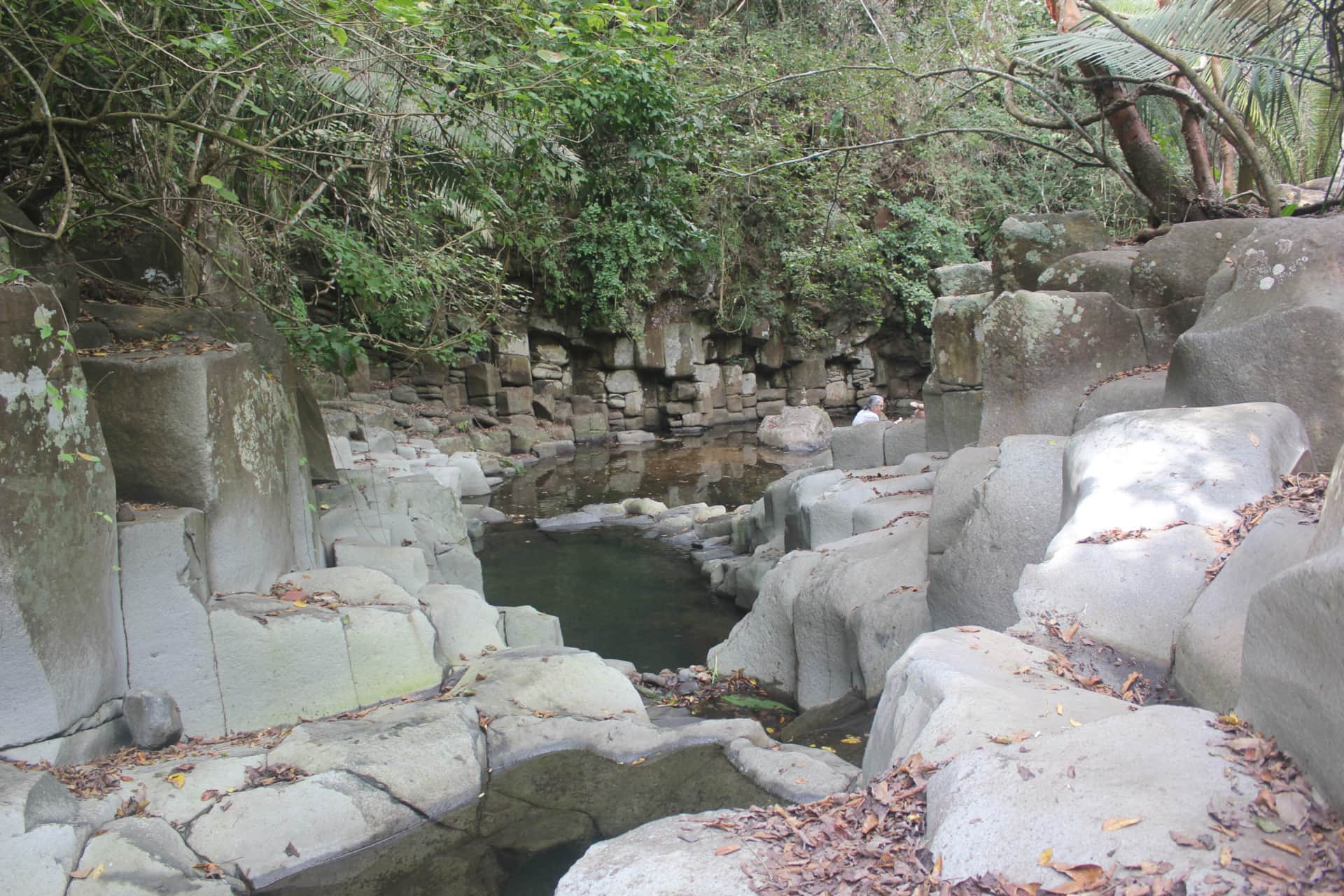
The reason most people come. A jungle creek lined with carvings runs up to the pools of La Pila del Rey, and the site is still used for ceremonies. The walk is short, the carvings get better the further up you go, and you can swim at the end. A caretaker at the gate collects 20 to 50 pesos.
The road in is rough and the trail is not marked. Our Altavista petroglyphs guide has the turns, the parking, and what to bring. The archaeological record of the site is worth reading first.
Soaking in the hot springs
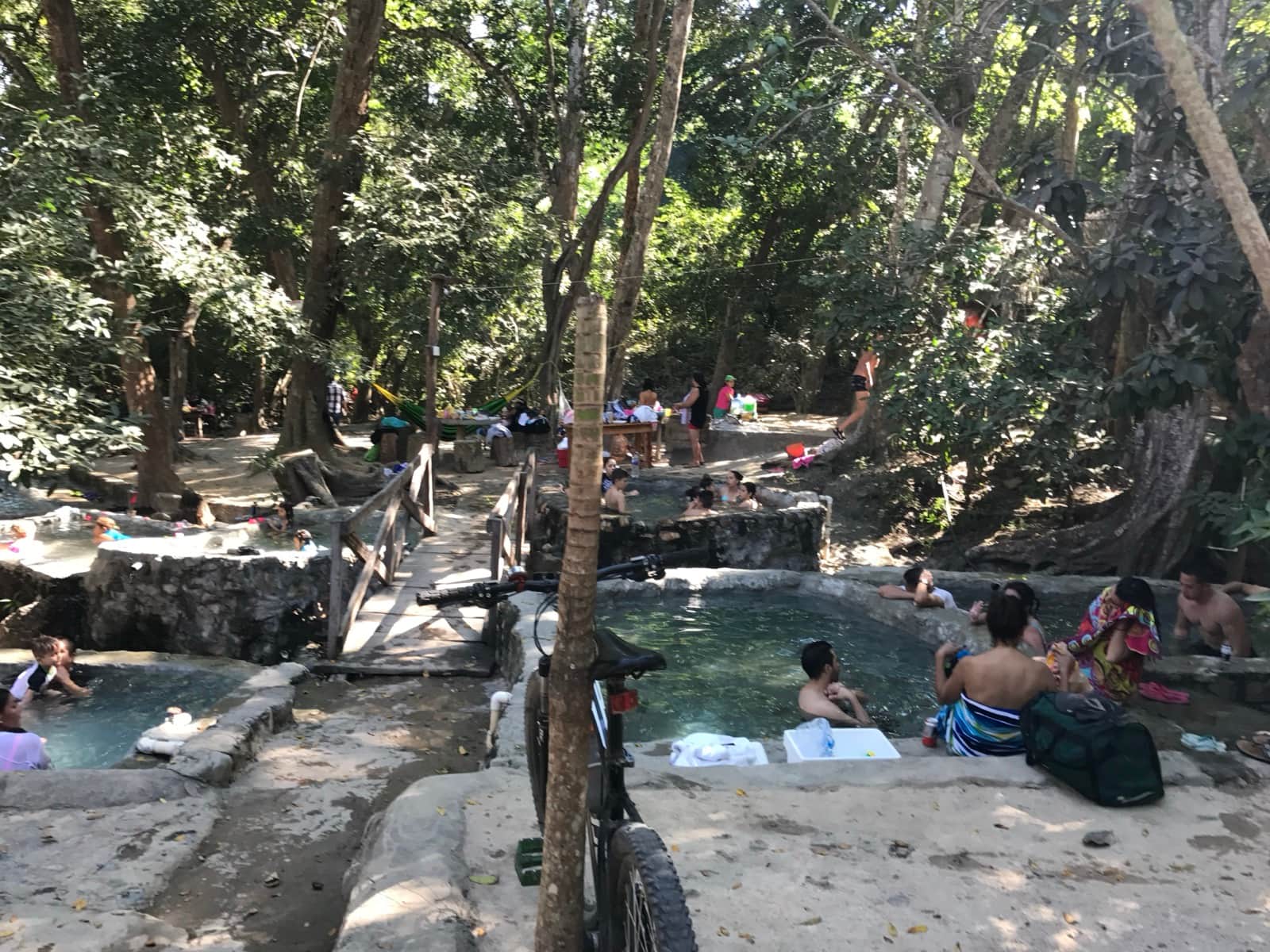
The Aguas Termales Nuevo Ixtlán are a short drive away, warm and mineral rich. Cascada El Salto is a waterfall you reach by trail, with cool water to swim in when you have had enough salt for one week. The falls run strongest from July through November and slow to a trickle in the dry months.
You can also walk the hills themselves, with views over the countryside and birds the whole way. Go with someone who knows the route and carries a machete. The trails are unmarked and the jungle closes in fast.
Picking a different beach every day
The coast is closer than people expect, and this is what wins most people over. Five beaches sit within half an hour, along the stretch the Riviera Nayarit tourism board promotes as its quiet north end.
- La Peñita de Jaltemba, 20 minutes: the working town with the best tianguis on the coast.
- Rincón de Guayabitos, 24 minutes: the classic swimmable family bay.
- Playa Chacala, 27 minutes: a jungle cove with palapa restaurants right on the sand.
- Los Ayala, 30 minutes: the same calm water as Guayabitos with half the people.
- Monteón, 30 minutes: wide, wild, and usually empty.
Eating well without a restaurant
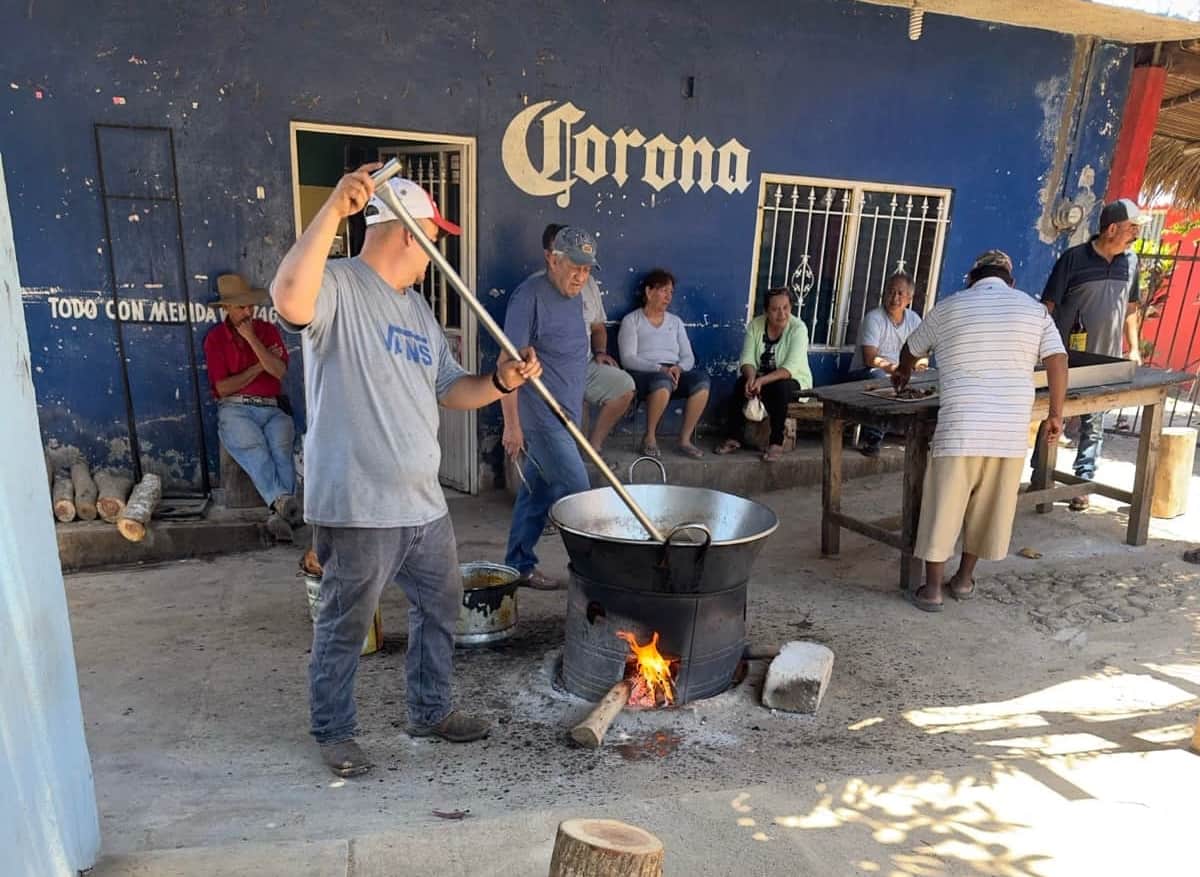 |  |
There are no restaurants in Altavista. You still eat well. The abarrotes, the corner stores people run out of their front rooms, carry groceries, fresh vegetables, cold drinks and local pastries like conchas and picones. The rest of the food comes to you.
- Monday to Friday, the bread guy comes through with music announcing he has pan. The bolillo is excellent.
- Wednesday, pig carnitas and chicharrones are made fresh and sold just outside the depósito, ready between 11am and noon.
- Saturday, the abarrotes next to the cancha sells hot dogs and burgers.
- Sunday, cow chicharrones, again outside the depósito.
- Every day, fresh tortillas at the tortillería or at any abarrotes.
- Some nights, someone sells food in the plaza, though it is never guaranteed.
You can also pay the local taxi to bring food up: pollo asado with all the fixings, or fresh ceviche from Las Varas. You meet the driver on la calle primaria and pay for the food plus a little extra for the run.
Waking up to roosters and chachalacas

The town is built around a plaza, a church and a cancha, and it is divided into nine barrios. The roads carry no posted names. The main one through town is known to everybody as la calle primaria.
Days move slowly and the soundtrack is roosters and chachalacas. The chachalaca is a bird barely bigger than a rooster, and people here call them little dinosaurs. One starts up somewhere down the hill, another answers, and within seconds the call has spread across the whole valley into something that sounds far older than the town.
The rest of the day fills in around it: birdsong, wind through the banana leaves, a taxi horn, a moto going past with tortillas. Nobody passes you without a greeting, and people keep trying to help even when you have no Spanish at all. When there is a fiesta or a funeral the whole town hears the music, and that is how it should be.
Ten days of fiesta that end on May 1
 |  |
La Fiesta de Altavista is the town's patron saint festival and the best thing that happens here all year. The patron saint is San José Obrero, whose feast falls on May 1, so the fiesta always ends that day. Count back ten days for the start, which puts most of it in the last week of April. Nothing is ticketed and everyone is welcome.
The nine barrios run it between them. Each barrio gets a day and takes charge of one thing, everyone contributes money, and everyone cleans, their own property first and then the communal areas, so the town is swept before the first day.
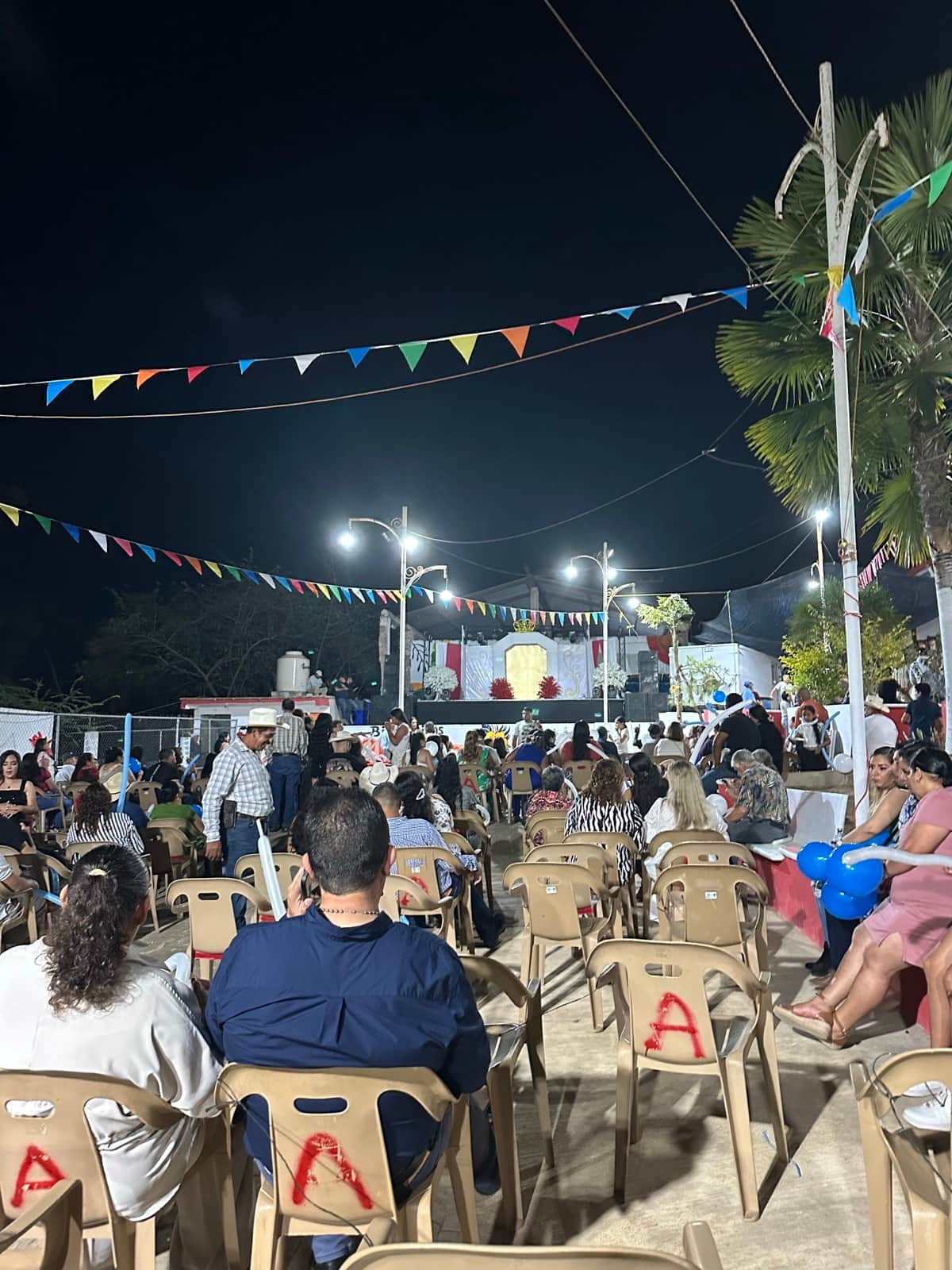
There is misa every morning and again every evening for all ten days. Evenings bring parades or events in the plaza, and which one you get depends on whose day it is. Fireworks go off at 6am, at noon and at 7pm, every day. It is never one big display: a single shot, then nothing, then another five minutes later.
The Reinas
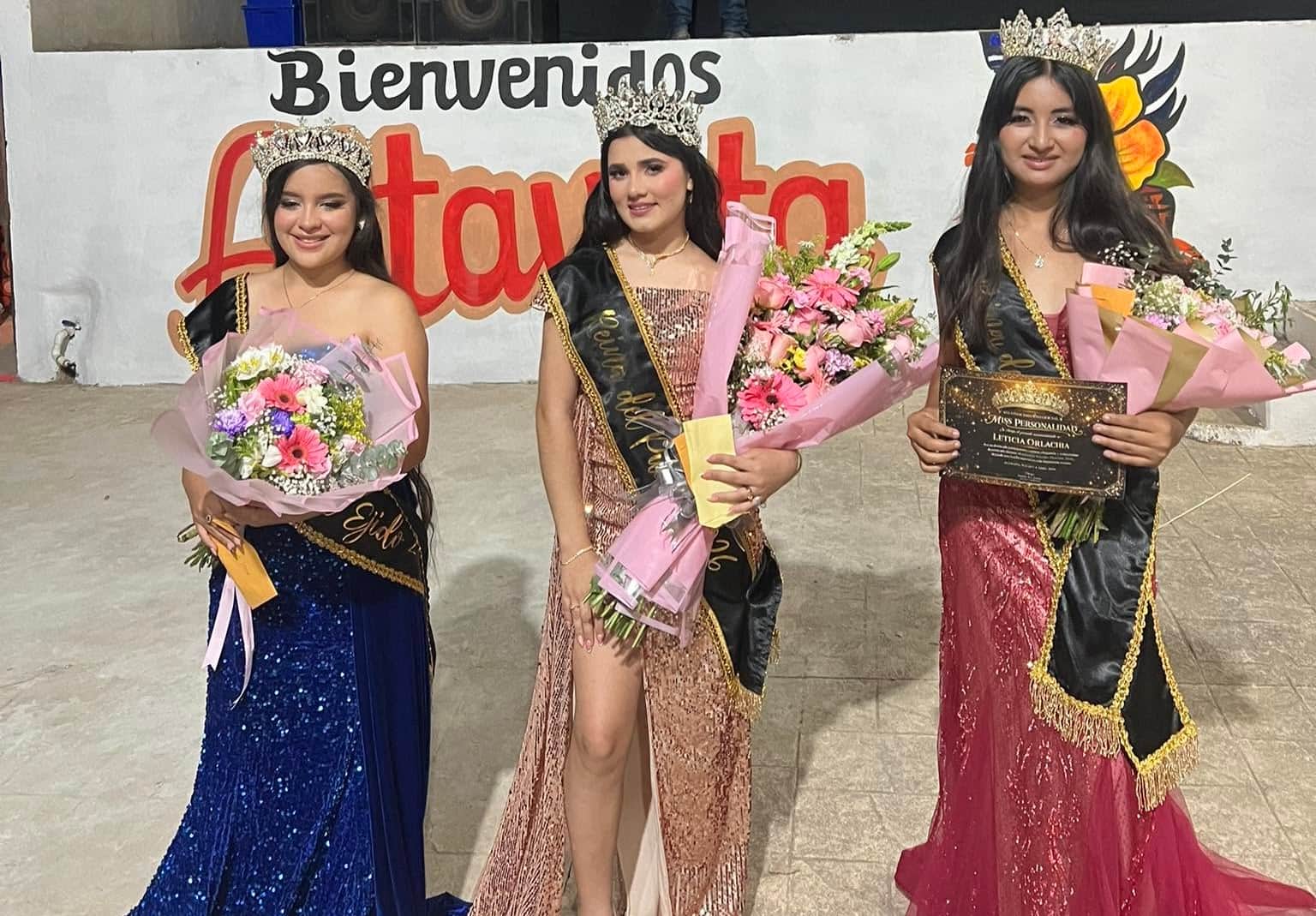
Early in the ten days the Reinas are announced, the queen contenders of Altavista, usually young women in their late teens to early twenties. Once the names are out the town picks sides. A few nights later comes the final: the contenders talk, show a talent, dance, and appear in several outfits through the night while the crowd yells for its favorite. The local dance school performs between every display.
On one of the big nights people stay up and dance straight through, then walk to the 6am misa without sleeping.
May 1, the biggest night
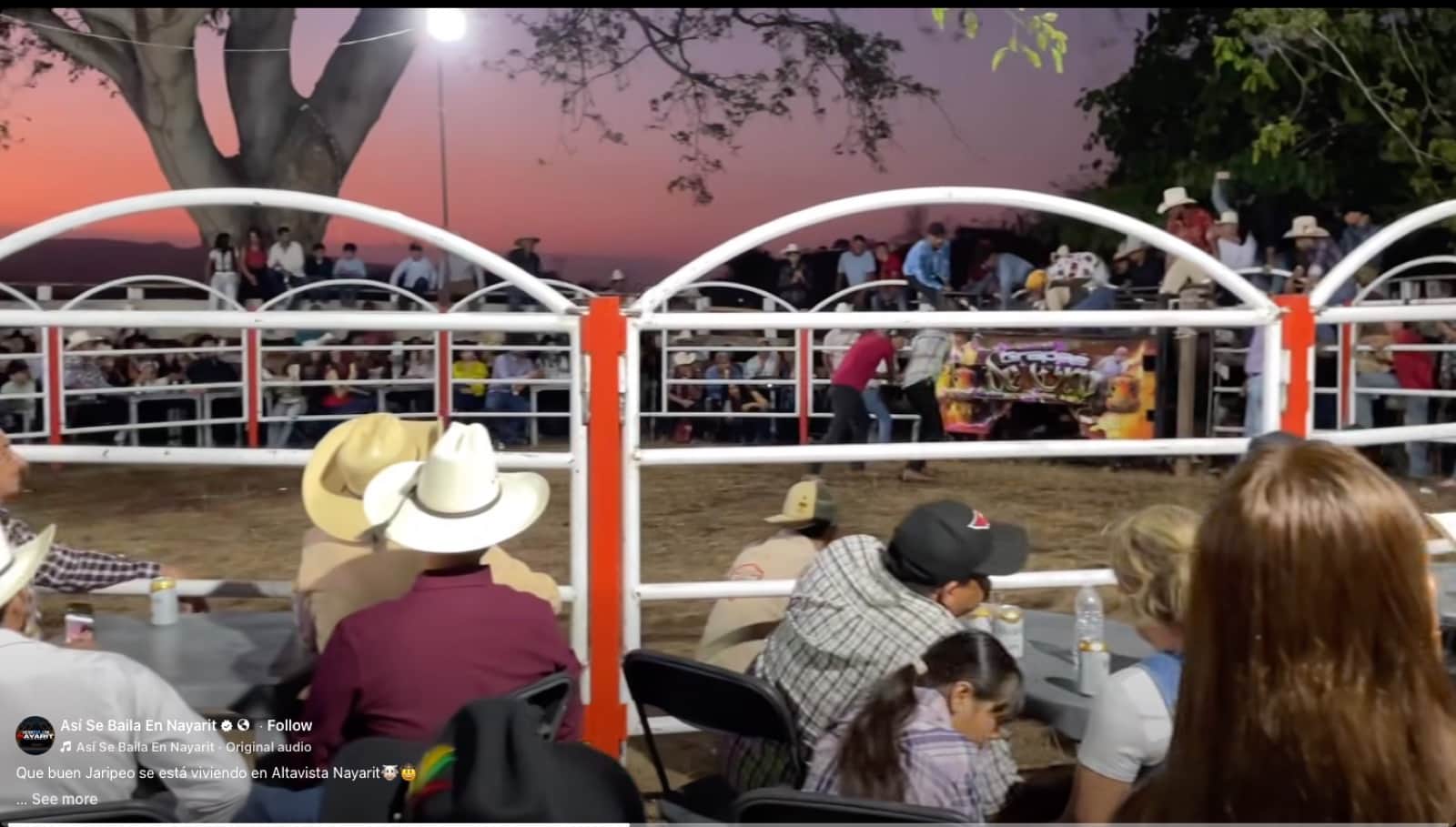
May 1 is when they hire the big bands. The streets are not closed, they simply fill with parked cars until nothing moves. Food vendors set up, the dancing goes late, and people come in from every town around, including people who grew up here and now live in the US and fly back for it.
The night runs in order. Bull riding first, around 6 to 7pm. Then the evening misa. Then the final fireworks, ending with the torito, a man in a bull frame covered in fireworks running through the crowd. Then the party: drinking, dancing, and a crowd that has been building for ten days. It is bring your own bottle, and people turn up with tequila and Squirt.
Dress is cowboy. Men wear hats, everyone wears boots, and the women wear tight jeans. Nobody will turn you away in shorts and sandals, but you will know.
The best time to visit
High season is November through April: dry, sunny, comfortable, and humpback whale season down in the bay. Green season through the summer is hotter and lusher, with afternoon rain, and it is when the waterfall actually runs.
For the town at its loudest, come for the last ten days of April and stay through May 1. For the town at its quietest, come any other week of the year.
Where you stay in Altavista

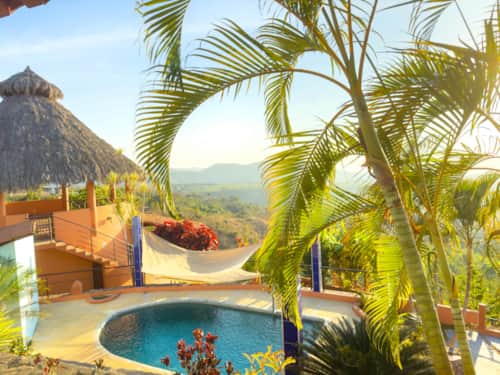
There are no hotels here. Cerrito Encantado sits on a hill just below the main road: two casitas plus private rooms, a salt water pool with valley and ocean views, an outdoor kitchen with a brick oven, Starlink wifi, and dogs who will greet you like family. Air conditioning is in Casa Chilam. The grounds are full of fruit trees, and whatever is ripe that week gets handed to whoever is staying.
Getting around is easiest with a car, though it is not strictly necessary. Local taxis run all day and the town colectivo covers the runs down to La Peñita and Las Varas.
Altavista is worth the drive up whether you come for the pools or for the fiesta. We rent the houses and the rooms here and take bookings direct, with no platform fees.
Frequently asked questions
Is Altavista, Nayarit worth visiting?
Yes, for the carvings and the pools alone. If you are staying anywhere between Chacala and Guayabitos, La Pila del Rey is one of the best half day trips on this stretch of coast. Come in the last ten days of April and you get the fiesta as well.
When is the fiesta in Altavista, Nayarit?
La Fiesta de Altavista runs for ten days and always ends on May 1, the feast of the town's patron saint San José Obrero. Count back ten days from May 1 for the start in any given year. May 1 is the biggest day, nothing is ticketed, and everyone is welcome.
Does Altavista have a beach?
Not in town. Altavista sits up in the hills with a long view over the ocean, and the coast is half an hour away at most: La Peñita at 20 minutes, Guayabitos at 24, Chacala at 27, and Los Ayala and Monteón both at 30.
Does Altavista have restaurants?
No, and you can still eat well. There are abarrotes with fresh basics, a daily tortillería, the bread guy Monday to Friday, Wednesday carnitas, Saturday hot dogs by the cancha, and taxi delivery of pollo asado or ceviche from Las Varas. Most guests cook. The restaurants are twenty minutes down the hill in La Peñita and Las Varas.
How much does it cost to see the Altavista petroglyphs?
A caretaker at the gate collects 20 to 50 pesos per person. There is no ticket office and no set opening hours.
Coming up for the fiesta?
We rent two casitas and private rooms here in Altavista, with a salt water pool and a valley view.