
Chacala, Nayarit Is Mexico's Own Beach Town

Chacala is the beach town Mexicans love to visit. You'll find a cove full of families, bandas playing at every restaurant, and fish on the grill. You're less likely to find the US and Canadian crowd that fills Sayulita and San Pancho.
Chacala is one long curve of sand, and the whole town runs along it. A typical day: You park. You pick a palapa restaurant or find a spot on the beach. After that the day mostly writes itself: get in the water, come out, eat pescado zarandeado with your feet in the sand, jump back into the ocean, take a break for fresh oysters and back for another dip.
Perfect if: you want palapas, grilled fish and mostly Mexican company on the sand.
Skip it if: you want nightlife or a big choice of restaurants.
Table of Contents
- Which end of the beach to swim at
- Claim a palapa and stay for lunch
- Get out on the water from the harbor
- Walk the whole town in ten minutes
- Side trips within half an hour
- Pick your season before you book
- Getting to Chacala, Nayarit
- Frequently asked questions
- Can you swim at Playa Chacala?
- How do you get to Chacala from Puerto Vallarta?
- When is the best time to visit Chacala?
- Do you need cash in Chacala?
- What does the name Chacala mean?
- Keep reading
Which end of the beach to swim at

Most of Chacala is one long beach with pretty decent waves throughout the day. Although I find that it's mostly calm, it can get a little rough and knock down an adult, so watch your kids and look for flags.
The calm water is at the north end of the beach. Walk along the beach until you find the path that takes you around the rocks to the little beach by the dock, la playita del muelle. It is protected from the break, the water is clear and flat, and it's where you often find families with young kids.
La playita del muelle is small. Arrive early to claim your spot because it will fill up fast and there's not much room for a lot of people.
There have been reports of sea urchins in this little cove, so to be safe you may want to wear water shoes.
Claim a palapa and stay for lunch

Palapa restaurants line the entire beach, and you can sit under the shade with your feet in the sand. Order lunch and stay as long as you want.
Somebody comes to your table and asks if you want to hear a song. Say yes and a full banda sets up next to you: drums, trumpets, a singer, all of it at volume. If you want a quiet lunch, Lalaxtli is up off the sand by the fishing cooperative at the harbor end, or bring your own food and eat on the beach.
Chico's is our favorite place to go and the one we always recommend to our guests at Cerrito Encantado. Get the pescado zarandeado. It is a whole butterflied fish, usually pargo (red snapper), grilled over the fire and served with hard bean tacos, salsas, tortillas, and tostadas. You can order it by the kilo.
Chac Mool has more reviews than anywhere else in town and sits right on the sand with coffee, a full bar and free wifi. Reviewers love the food and say the kitchen is slow. Best for breakfast, with time to spare.
Las Brisas belongs to the hotel of the same name and reviews better than most of the beachfront on service. Best for a sit-down dinner off the sand.
Mauna Kea Cafe bakes its own bread and looks out at the water. Best for breakfast before the beach fills up.
Get out on the water from the harbor
Boat trips leave from the little harbor at the north end, past the path around the rocks. There is no booking office. You talk to the boatmen on the sand, the day before or that same morning, and agree on a price.
They run snorkeling trips, fishing trips and whale watching. Humpbacks are on this coast from December 8 to March 23, the season set for the municipality of Compostela, and January and February are the peak months.
If you like surfing, there is a nearby cove called La Caleta just north of the bay, a left point break over shallow rock and one of the better waves on this coast. It is for experienced surfers and there is no easy public access: a panga from Chacala for around 700 to 800 pesos, or a jungle hike of an hour or more with your board.
South of the beach there is Playa Las Cuevas, reached on foot over the headland with a semi difficult walk. The water there is strong.
Walk the whole town in ten minutes
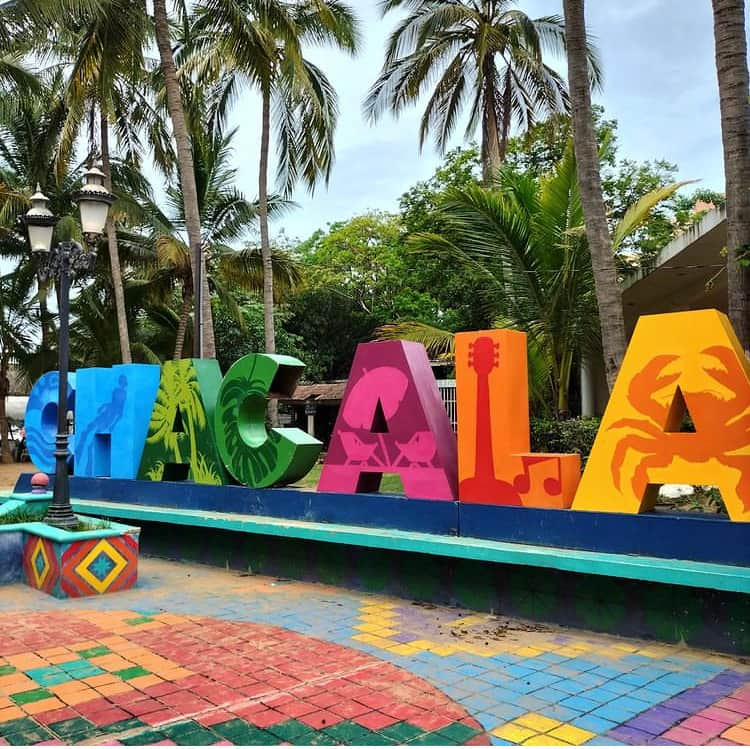
The jungle and the estuary behind town are full of birds, so bring binoculars if that is your thing.
Many of the rentals in town are rooms built on top of family homes, a lot of them with ocean views. We keep a separate guide to where to stay in Chacala.
Side trips within half an hour
Just a short drive away you can go to the waterfalls in El Capomo, or to La Pila del Rey, a ceremonial site attributed to the Tecoxquin people and estimated at around 2,000 years old. It is still a living sacred site for the Huichol (Wixárika) people. Our guide to the petroglyphs covers the walk in and what to expect.
Las Varas is the working town up at the highway, with the bank and the big supermarket. Chacala runs its own small market on Saturdays.
Pick your season before you book
The best time to visit is high season, November through mid May. It is dry and warm, everything is open, and whale season runs through the middle of it.
If you want to save and do not mind the hotter weather, come after mid May through October. This is the rainy season: the whole coast turns green, some days the rain lasts all day, other days it comes just in the evening. Rainy season is also hurricane season. If you book in these months we highly recommend travelers insurance. Some restaurants cut their hours or shut for a few weeks.
Getting to Chacala, Nayarit
Puerto Vallarta airport to Chacala is about 90 minutes. Driving, you come off Highway 200 at the signed turnoff by Las Varas and drop about 10 kilometers through the hills to the water.
You can find paid parking at the beach entrance, restaurant parking if you're eating there, and free street parking. All three can fill up on weekends and holidays.
If you need to rent a car, here's our guide to renting a car in Mexico.
Without a car, head to the Central de Autobuses, Puerto Vallarta's main bus station, about a 10 minute taxi from the airport. Take a Pacifico line bus to Las Varas, around 200 pesos. From Las Varas it is a 15-20 minute taxi to Chacala, about 150 pesos, or hop on the colectivo that runs between Las Varas and Chacala.
It is customary to tip at restaurants or when a service is done for you, like local guides. It is less customary to tip taxis, but we always do.
Chacala is 27 minutes from Cerrito Encantado, in Altavista. If you would rather have a kitchen, a pool and views that take your breath away, check out our rentals.
Frequently asked questions
Can you swim at Playa Chacala?
Yes, but pick your spot. The long main beach gets waves big enough to knock you down, and it flies warning flags when it does. The calm swimming is at the little beach by the dock at the north end, which is protected from the waves. It is small, so it gets crowded when the town is busy.
How do you get to Chacala from Puerto Vallarta?
Drive north on Highway 200 for about 90 minutes and take the signed turnoff by Las Varas, then follow about 10 kilometers of paved road down to the beach. Without a car, take a Pacifico bus from Puerto Vallarta's Central de Autobuses to Las Varas for around 200 pesos, then a taxi for about 150 pesos or the 15 peso colectivo.
When is the best time to visit Chacala?
November to mid May is dry and sunny with everything open. Humpback whales pass this coast from December 8 to March 23. Mid May through October is hotter and greener with afternoon rain, fewer people and lower prices, and some places cut their hours.
Do you need cash in Chacala?
Yes. Most of the town takes cash only, and cards usually carry a surcharge where they are accepted at all. There is one cash machine and it charges a lot, so it is worth drawing pesos in Las Varas or Puerto Vallarta before you arrive.
What does the name Chacala mean?
It comes from the Nahuatl word chacalin, meaning shrimp. The name means the place where there are shrimp.
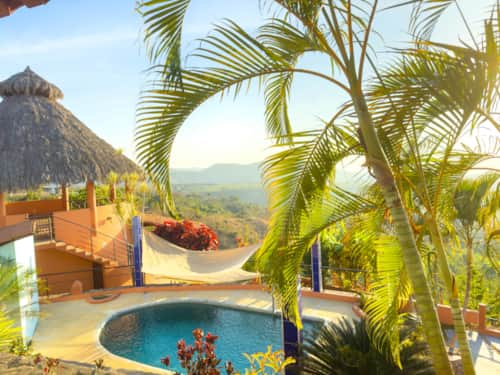
Making Chacala your beach day?
We are 27 minutes up the hill in Altavista, with a salt water pool waiting for you.
Keep reading
- Where to Stay in Chacala, Nayarit: Hotels and Rentals
- Los Ayala, Nayarit: Calm Bay and a Hidden Cove Beach
- Riviera Nayarit Beach Towns: A Local Guide to the Coast