
La Peñita de Jaltemba, Nayarit: A Local Guide to the Bay's Everyday Town
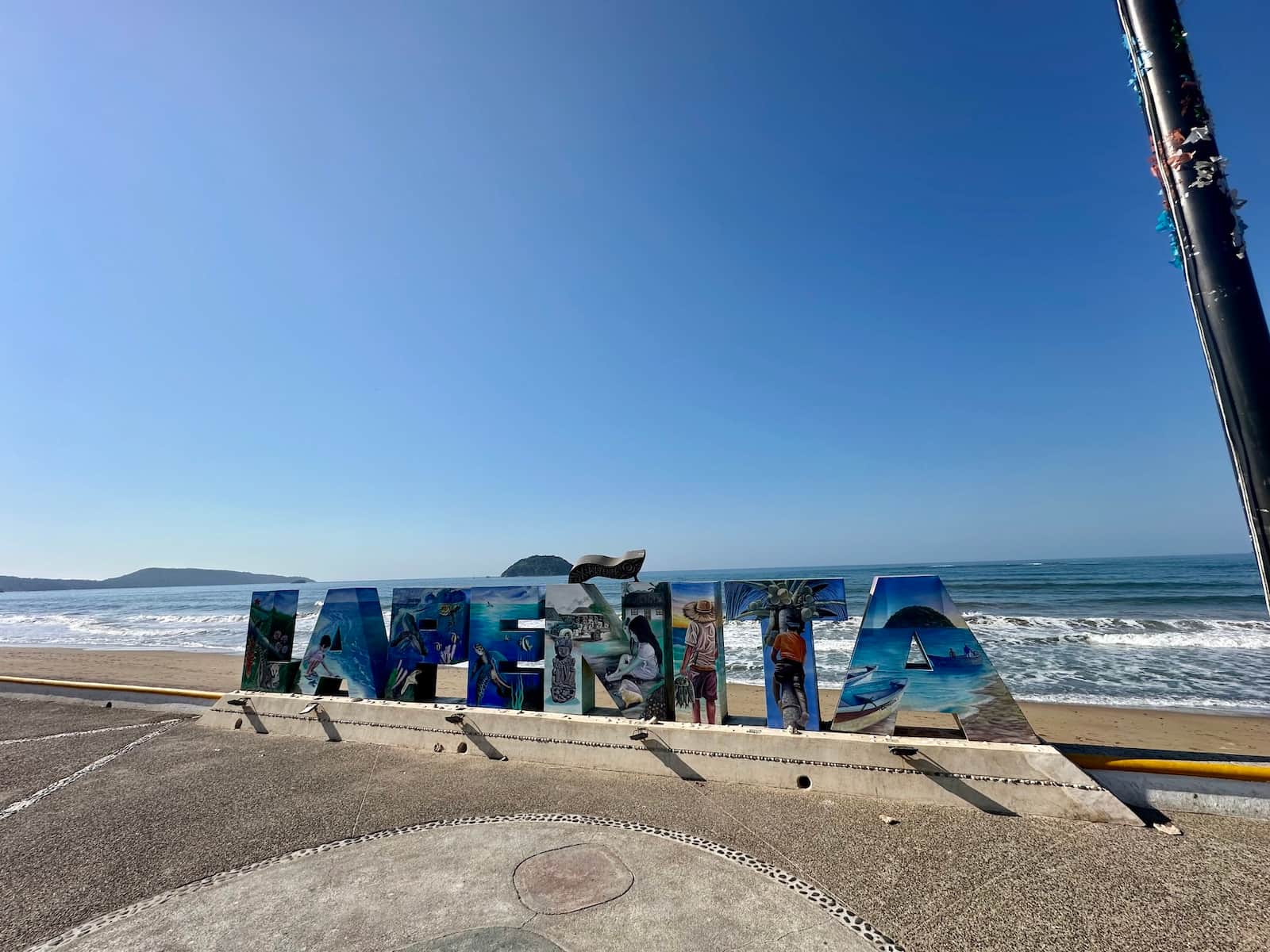
Just across the pedestrian Bridge of Life from Rincón de Guayabitos sits La Peñita de Jaltemba, the working heart of Jaltemba Bay. Fishing pangas still come in with the morning catch, pineapple fields still feed the local economy, and the main road is lined with shops and restaurants that serve the whole bay. A popular telenovela filmed on La Peñita's beach. Here's how to know it like a local.
Table of Contents
- La Penita is for you if
- A town with deep roots
- What life is like here
- Where La Peñita sits in Jaltemba Bay
- Understanding the neighborhoods
- Mountain side of the highway
- Ocean side of the highway
- The beach and the new malecón
- Things to do
- The Thursday tianguis
- When to go, and when it winds down
- How the market is laid out
- What people like to buy
- High season and low season
- Market day notes
- Restaurants in La Peñita
- Traditional Mexican and local favorites
- Other options
- Coffee and food carts
- Getting around
- The colectivo
- Taxis in La Peñita
- Parking
- Cash and money
- Where to stay
- Frequently asked questions
- Is La Peñita de Jaltemba worth visiting?
- What is La Peñita known for?
- What day is the La Peñita market?
- Can you get around La Peñita without a car?
- Does La Peñita have a nice beach?
- You may also like
La Penita is for you if
Perfect if: you want local prices, working streets, and Guayabitos' beach minutes away.
Skip it if: you want a groomed resort beach scene or nightlife. Guayabitos next door does the beach day better.
Come to La Peñita for real everyday Mexico: the bay's best market, honest food, banks, pharmacies, and a beach with room to breathe.
Stay in or near La Peñita if you want town life at local prices, with Guayabitos and Los Ayala minutes away.
If you want a resort-style beach scene, Guayabitos next door does that; La Peñita is where the bay actually lives.
A town with deep roots
La Peñita is older than it looks. The area was home to the Cora and Wixárika (Huichol) peoples long before the Spanish arrived, and tradition holds that the Mexica passed through and settled here on their legendary journey from the island of Mexcaltitán toward what became Tenochtitlán. Even the name carries that history: Jaltemba comes from Nahuatl and means place of sandy soil, a nod to the fertile coastal land that made this an agricultural and fishing hub through the colonial era. Two industries have carried the town ever since: pineapples and small-scale fishing, and both are still working today.
What life is like here
Mornings start with pangas dropping their nets and fishermen unloading the day's catch steps from the beach. By afternoon the streets fill with the smells of taco stands and fondas. It's an eclectic mix of locals, winter residents, and travelers sharing one small grid of streets. This is also the town where things get done: if you need something built, fixed, or found, somebody in La Peñita has it. And from November through April the town swells with returning winter residents from Canada and the US who come back year after year because their money goes far here, the town feels safe and familiar, and there are enough fellow winter neighbors to fill a social calendar. Several RV parks, including a full-service one near the beach, have made La Peñita a fixture on the RV snowbird route for decades.
Where La Peñita sits in Jaltemba Bay
La Peñita is one of three closely connected towns on the bay: Rincón de Guayabitos just across the Bridge of Life, and Los Ayala at the bay's south end. You can walk, bike, taxi, or take the colectivo between them.
Understanding the neighborhoods
La Peñita is divided by the highway into two general areas.
Mountain side of the highway
Jardin de Eden, Sierra Linda, Lazaro Cardenas, Cerro de la Cruz, Isla del Verano, Las Rosas, Las Palmas, Mira Sol, Miramar Norte, and Miramar Sur. These colonias are more residential and in some cases slightly elevated, offering bay or hillside views.
Ocean side of the highway
The RV Park area, Pescadores, Cedros, Centro, and Paraiso. Centro is the heart of town life: the plaza, the taxi stand, shops, restaurants, and beach access.
The beach and the new malecón
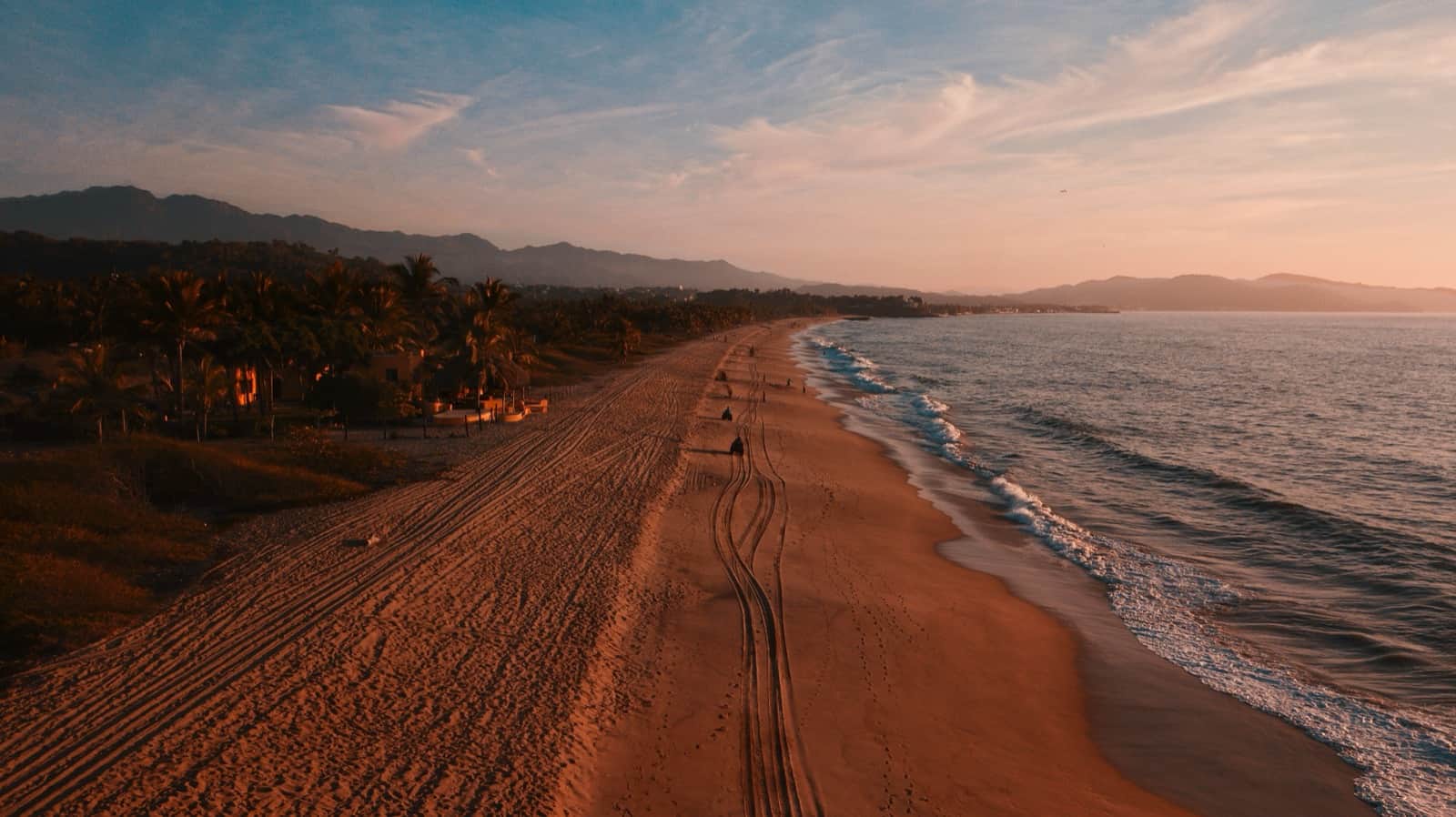
Playa La Peñita runs long and uncrowded along the bay, great for sunrise and sunset walks, casual swims, and beach snacks without the Guayabitos crowds. The town's new malecón added comfortable benches under queen palms, new lighting, and wide steps with wheelchair ramps. From the walkway you get the full sweep of the bay and the hills behind it. Quiet sandy stretches like Playa El Playon are nearby when you want calm water and nobody around.
For a proper beach day, most people head to Guayabitos. Our own pick is Chacala.
Things to do
- Isla del Coral: boat tours from the bay for snorkeling, swimming, and scenic trips.
- Boat tours: sunset cruises and fishing trips around Jaltemba Bay, plus day trips to the Islas Marietas booked locally.
- Carnaval: every year, in late February into early March (the dates shift with the Lent calendar), the streets fill with music, parades, and celebration.
- Festival del Pescador: the town's fisherman's festival celebrates the trade that built La Peñita, right on the beach where the pangas land.
- Trails: hiking, horseback riding, and nature walks in the hills around town.
- Jaltemba Equine Education Project (J.E.E.P.): an animal rescue supporting horses and other animals, with visits and volunteer opportunities.
- Plaza Principal: cafés, people watching, and evening life at the center of town.
The Thursday tianguis
The La Peñita Thursday market is the biggest tianguis on this stretch of coast, and one of the oldest in Nayarit. Listed hours are 7am to 2pm. It sets up on and around Bahía de Manzanillo Sur in Centro and spreads out from the main avenue through the plaza and up the side streets, hundreds of stalls deep, selling produce, fish, dairy, bread, crafts, clothes, tools and food. The tianguis is a traveling market that works a weekly circuit of coast towns, and Thursday belongs to La Peñita.
When to go, and when it winds down
Go in the morning. Vendors are setting up before 7am, the market is complete by 8, and regulars agree it thins out after noon and is mostly packed away between 1pm and 2pm. Arrive at lunchtime and you get a half-empty street.
Heat is the other argument for early. The stalls run down streets lined with buildings, cloth awnings cover much of the walkway but the airflow is poor, and it gets hotter and more crowded as the morning goes on. Even in the off season, when the market is smaller, arriving at 11am means crowds and real heat.
How the market is laid out
There are three markets inside the tianguis, and they sit in a predictable order. Coming in from the main avenue, the craft and souvenir booths are first, clustered nearest the plaza and the main street. Behind them is the food: fruit and vegetables, herbs, fish and shrimp on ice, a dairy section, fresh bread and pastries.
Keep walking away from the avenue and you reach the part locals come for. This is the long flea-market end: second-hand clothes and shoes, kitchenware, tools, hardware, blender and stove parts, electronics, furniture, and the run of plastic housewares that regulars call plastic alley. The further you get from the avenue, the more the stock is aimed at people who live here.
Wear shoes you can walk in. The streets are cobbled and uneven.
What people like to buy
Produce and seafood are what most shoppers fill their bags with. Fruit and vegetables come in from farms and mountain towns around the bay, fish and shrimp sit on ice, and there is a dairy section, fresh baking, roasted candied nuts made on the spot, locally produced honey and coffee, and vanilla. Bread and cakes sell out early.
The craft stalls carry silver stamped .925 and .950, Huichol beadwork and yarn art, blown glass, Talavera dishes, embroidered blouses and tablecloths, bed linens, pottery, leather work and rugs from Oaxaca.
Two things to know. The same items repeat from stall to stall, so it pays to walk the length of the market once before buying. And a share of the goods sold as handmade are factory made.
High season and low season
The market runs every Thursday of the year, but it is really two markets. From November through March or April the winter residents are back and the artisan booths fill in around the plaza and along the avenue. By May most of that craft side has gone home and what stays is the steadfast regulars plus the full local market: produce, seafood, household goods, clothes, tools.
Summer is the local market, and it is still busy and still hot. If you are here in the low season, come for the food stalls and the housewares rather than the crafts.
If Thursday does not fit your week, Guayabitos has a smaller Monday market from 8am to 1pm in high season, and both Lo de Marcos and Chacala hold Saturday markets.
Market day notes
Four things change on Thursday. The town-level detail behind each one is further down the page.
- Getting there. La Peñita is 20 minutes from Cerrito Encantado. Without a car the colectivo drops you a short walk from the stalls, and from Guayabitos you can cross the pedestrian Bridge of Life and walk into town in 20 to 30 minutes. See getting around.
- Parking. It gets tight. See parking.
- Cash. Stall vendors take cash only, and small bills move faster than large ones. See cash and money.
- Food. More carts than usual set up on market day. See coffee and food carts.
Restaurants in La Peñita
La Peñita offers casual, locally owned dining with a mix of traditional Mexican and international options, from fine dining to taco stands. The best way to find your favorite is to explore Centro on foot at dinner time.
Traditional Mexican and local favorites
Other options
Coffee and food carts
Food carts work all around La Peñita all week, mornings and evenings, thickest around the plaza and the main drag. Thursday brings more of them. Our rule of thumb is to go where it is busy. It all smells delicious.
Getting around
The colectivo
Route: Los Ayala to Guayabitos to La Peñita to La Colonia and back, roughly every 20 minutes from 6:00 a.m. to 8:00 p.m. It costs about 15 pesos per person, exact change appreciated. Flag one down at the blue bus stop signs; it's affordable and widely used by locals.
Taxis in La Peñita
Taxis are regulated white cars or minivans, found along the main road or at the plaza taxi stand. Standard rates, last confirmed in March 2025:
- Guayabitos to the top of the main drag in La Peñita: 55 pesos
- Further into town or across the highway: 60 to 70 pesos
- Town to Hinde y Jaime's: 100 pesos
- Town to JEEP Hilltop Refugio: 100 pesos
Rates are set by local taxi unions and may adjust annually. If unsure, ask before getting in: "¿Cuánto cuesta ir a...?" Tipping is not mandatory, but a few pesos is appreciated.
Parking
Street parking is what there is, and on Thursdays the tianguis closes the streets it runs on. The primary road fills and the side streets fill, and you drive around until something opens up.
The parking configuration keeps changing. Sometimes cars park parallel along the curb, sometimes angled so more of them fit. It changed three times in the last year alone, and it was angled the last time we were in town.
Look at what the cars around you are doing and match it.
Cash and money
La Peñita runs on cash. The bigger stores and many of the sit-down restaurants take cards; the market stalls, the beach vendors and the small shops do not.
How much to bring is your call. Bigger craft purchases add up fast, blankets especially, so plan for more than you would spend on a normal day out.
Keep your money close in the market crowd, the same as you would at any busy market anywhere. Purse in front of you and within reach of your hand.
For banks, ATMs, withdrawal fees and where to change dollars, see our guide to exchanging money in Mexico.
Where to stay
Staying in La Peñita puts you in the middle of town life, close to restaurants, the plaza, and the beach. If you want something quieter, Cerrito Encantado is about 20 minutes away in the hills of Altavista: casitas and rooms, a salt water pool, Starlink wifi, and easy access to La Peñita, Guayabitos, and Los Ayala. Many visitors enjoy the energy of La Peñita during the day and return to a calmer retreat in the evening.
Frequently asked questions
Is La Peñita de Jaltemba worth visiting?
Yes, especially if you want everyday Mexico rather than a resort scene: the bay's biggest market, honest local food, a long uncrowded beach, and real town life a bridge away from Guayabitos.
What is La Peñita known for?
The Thursday tianguis, small-scale fishing, pineapple farming, and one of the friendliest winter communities on the Riviera Nayarit. It's the working hub that supplies all of Jaltemba Bay.
What day is the La Peñita market?
Thursday. Listed hours are 7am to 2pm, the market is complete by 8am, and it winds down between 1pm and 2pm. It runs from the main avenue through the plaza and up the side streets, with produce, seafood, crafts, street food and household goods.
Can you get around La Peñita without a car?
Easily. The colectivo runs between Los Ayala, Guayabitos, La Peñita, and La Colonia about every 20 minutes for 15 pesos, regulated taxis wait at the plaza with set rates, and you can also walk to Rincón de Guayabitos from La Peñita across the pedestrian Bridge of Life in about 20 to 30 minutes each way.
Does La Peñita have a nice beach?
Yes. Playa La Peñita is long, local, and rarely crowded, with a new wheelchair-accessible malecón, benches under palms, and some of the bay's best sunsets.
Want town energy by day and hillside quiet by night? Check dates on our rentals page or message us on WhatsApp. We book direct, no platform fees.
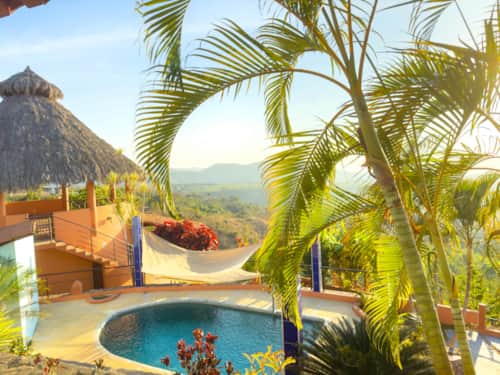
La Peñita is town energy all day. Twenty minutes up the hill, our casitas give you birdsong nights, a salt water pool, and the Thursday market still on your doorstep. Book direct.
See rentals